


As the Australian fashion industry descended on the harborside Museum of Contemporary Art for Australian Fashion Week Resort 27, there was just as much action off the runway.
AFC Talks, Business Built to Last: Fashion’s Bottom Line was one of the keynote highlights of the week, where guests heard firsthand from Carla Zampatti CEO Alex Schuman, Camilla CEO Rebecca Mansergh and Mariam Seddiq, founder of her eponymous label, on the financial decisions, operational discipline and brand strategies shaping long-term growth in fashion.
Conversations around resilience, profitability, and long-term thinking are a must-have for the fashion industry right now, whether locally-based or globally-minded.
Style Arcade was there to catch the key points on how to foster sustainable business growth, including adopting longer product development lead times, analyzing omnichannel data for identifying geographic demand, and understanding how measured growth consistently outperforms aggressive strategies.
The panel emphasized the importance of maintaining creative integrity, and discussed the challenges of balancing creative ambition with commercial discipline and the need for sustainable, long-term growth.
Here are all the useful, tangible takeaways for fashion retail brands from the panel discussion.
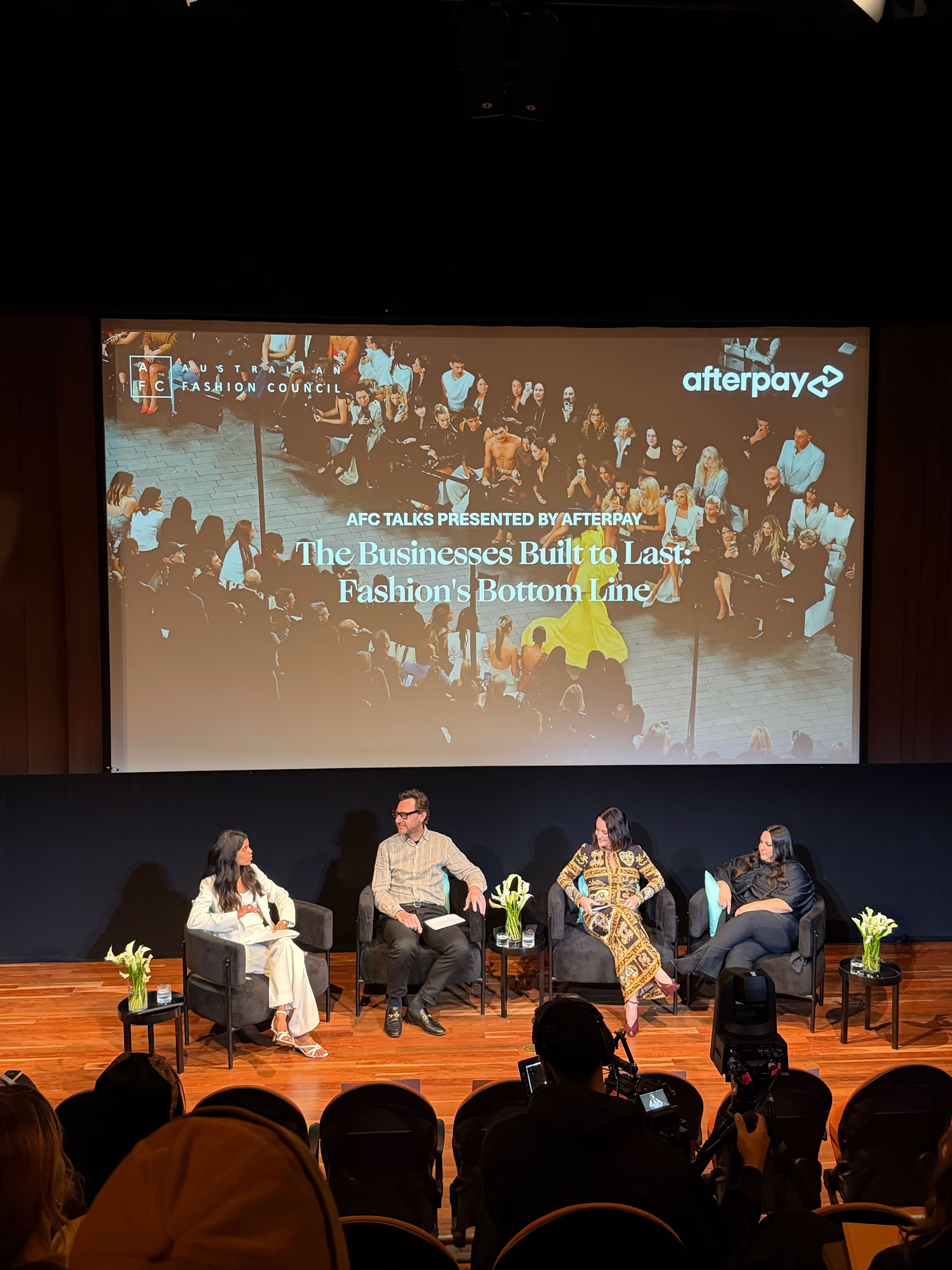
Key takeaways from Business Built to Last: Fashion’s Bottom Line
Use these as practical checkpoints when evaluating strategy, channel expansion, product planning, hires, and financial controls.
Preserving brand DNA
A business built to last starts with protecting the core identity of the brand, and defining the non‑negotiable brand DNA (voice, values, signature product language), and keeping those intact when scaling or changing channels.
Be deliberate about what to evolve: Distinguish aesthetic/strategic elements that must stay from tactical things that can change for new customers or geographies.
Hire local talent and pair it with brand DNA holders: Combine on‑the‑ground market experts with team members steeped in your brand to execute culturally relevant strategies.
Invest consistently in brand awareness: The panel urged brands not to underfund marketing, with PR, influencer partnerships, storytelling, and local community activations considered essential, especially when entering large, new markets.
“The PR, influencers and social media - it's got to be always on,” said Camilla CEO, Rachel Mansergh. “We're releasing, as we scale, how crucial that is. You just can't open a store and expect that [customers] will come, they need to understand who you are and what you're about. For our brand in particular, the storytelling, the artisan, the craftsmanship, that story is quite intricate, and it's the core of who we are; so getting that across is crucial.”
Keep the universal story: Retailers should master localizing communications and product positioning, but adapt messaging, product mix, and activations to local tastes (e.g., Camilla saw younger US customers and heavy TikTok discovery).

Adapting the supply chain
Extend product development timelines for global supply chains: Plan longer lead times, source earlier, and build a buffer between design and wholesale/retail delivery to avoid inventory mismatches.
“We manage our stock very tightly (with) AI tools, in terms of anticipating what's there and how we need to relocate all of that,” said Carla Zampatti CEO, Alex Schuman.
“For everything that we do, we sell everything that we manufacture. So the danger of producing, getting things from China, is the over-order and then ending up going to waste. But we sell everything, so we were very keen not to over produce anything," he explained.
Build cash‑flow protections for bespoke and wholesale: Use deposits, staged payments, and clear contracts for commissions/custom work; small production runs and made‑to‑order can preserve cash.
Executing international market expansion
Camilla CEO Rebecca Mansergh noted the differences between Australia and the US, is that in Australia, there is a very long held perception about who Camilla is, one which is centred around caftans and resort wear.
“But what's happened internationally is that our customer comes to us for a much broader end use,” Rebecca explained. “They're coming to us for denim, for outerwear, for separates, for knitwear, tailoring. And so the perception, or translating that brand story, it's naturally happening in quite an organic way, because that's that holistic product offer, is what's come with that is a much younger demographic, so which is really quite interesting.”
Test markets before committing to full stores: Use trunk shows, pop‑ups, and short leases to validate demand, learn local nuances, and reduce upfront retail risk.
Embrace channel diversification carefully: Use wholesale to build reach, DTC for margin and customer data, and retail/pop‑ups for brand experience—test and sequence these channels.
Use omnichannel data to guide expansion: Leverage online sales, pop‑up performance, wholesale orders, and customer analytics to identify geographic hubs and product opportunities.

Alex emphasized the need for close connections with stores and constant feedback loops to iterate and improve.
“I think it's incredibly important... We have this hard data with everything that's sold, and hard data from the stores. But we also try to get all the soft data: how many people came in and if they tried something on, or why they didn't buy. What was their feedback? What was the barrier to purchase? That is that constant feedback loop... it's so powerful. It's not the hard dollars and units," he said.
Building operational foundations
The panel discusses the importance of longevity and resilience in fashion business, emphasizing slow and steady progress, beginning with solid foundations in system processes and functional operations.
Keep costs lean but prioritize the right spend: Control overheads, but don’t skimp on marketing, local leadership, or critical retail investments that drive discovery and conversion.
Delegate and build systems as you scale: Founder designers must learn to delegate operational tasks and create clear processes so creative work can remain focused and sustainable.
Prioritise measured, sustainable growth: Slow, consistent scaling with testing, controls, and governance wins over rushing for size that dilutes quality or brand clarity.
Image credits: Carla Zampatti, Camilla


