


With more ways to shop than ever before comes more reasons for returns. Now, fashion’s struggle to reduce return rates is being met with the technology that could hinder it further.
Could ‘try before you buy’ (TBYB) be the solution? Here’s why the purchase method is gaining popularity as a way to curtail returns and drive average order value (AOV) for online retailers.
Agents and abandonment
According to a Vogue Business survey of almost 700 consumers, 38% said they are often returning clothes because they are ill-fitting, with 91% saying their clothing size changes depending on what brand they’re purchasing from. And among these well-known sizing challenges, new factors are contributing to a poor online customer experience, which means fashion retailers are required to understand and navigate further reasons for returns.
For example, as virtual try-on becomes more ubiquitous in the online shopping experience and agentic shopping continues to rise, the flow-on effects of early adoption and learning stages of these tools may actually end up increasing return rates. While agentic AI will gradually get to know a customer’s unique size and adapt purchases accordingly, right now, chatbots may be surfacing irrelevant products.
Hummii’s 2026 Online CX report outlines the issues driving cart abandonment and preventing customers from coming back.
“Interestingly, customer support gaps are often driven by AI chatbots,” said Hummii CEO and co-founder Mareile Othus. “Chatbot obstruction was not mentioned as a reason, but it is now very common. In general, negative feedback related to AI has increased by 70% from last year.”
However, according to Othus, the majority of problems occur once the customer gets their hands on the delivery.
“What’s really interesting is that the story has shifted. The biggest gap we’re now seeing is actually after the purchase. You can win the sale…but you lose the customer in what happens next.” Othus says one of the biggest unlocks to lower return rates will be the post-purchase experience.
“AI is getting genuinely good at fit, sizing, and returns. If brands can increase confidence upfront and reduce returns, it changes the economics entirely,” she said.
Try Before You Buy: The key to confidence
Enter ‘try before you buy’. The online shopping practice – which allows customers to order products and try them on in the comfort of their home before deciding what they’ll purchase – not only increases the number of items shoppers add to their cart, but also the likelihood of the customer keeping more items.
TBYB platform Mirra, rolled out by brands including Silk Laundry and Neuw Denim, enables customers to check out up to four items with no upfront payment and a three-day trial. The integrations make sense for Neuw: denim is one of the most returned items across fashion categories, with around a 25–40%+ return rate across brands. While for dress and occasionwear brands, like Silk Laundry, the higher price points can encourage fast returns if the fit and silhouette aren’t spot-on.
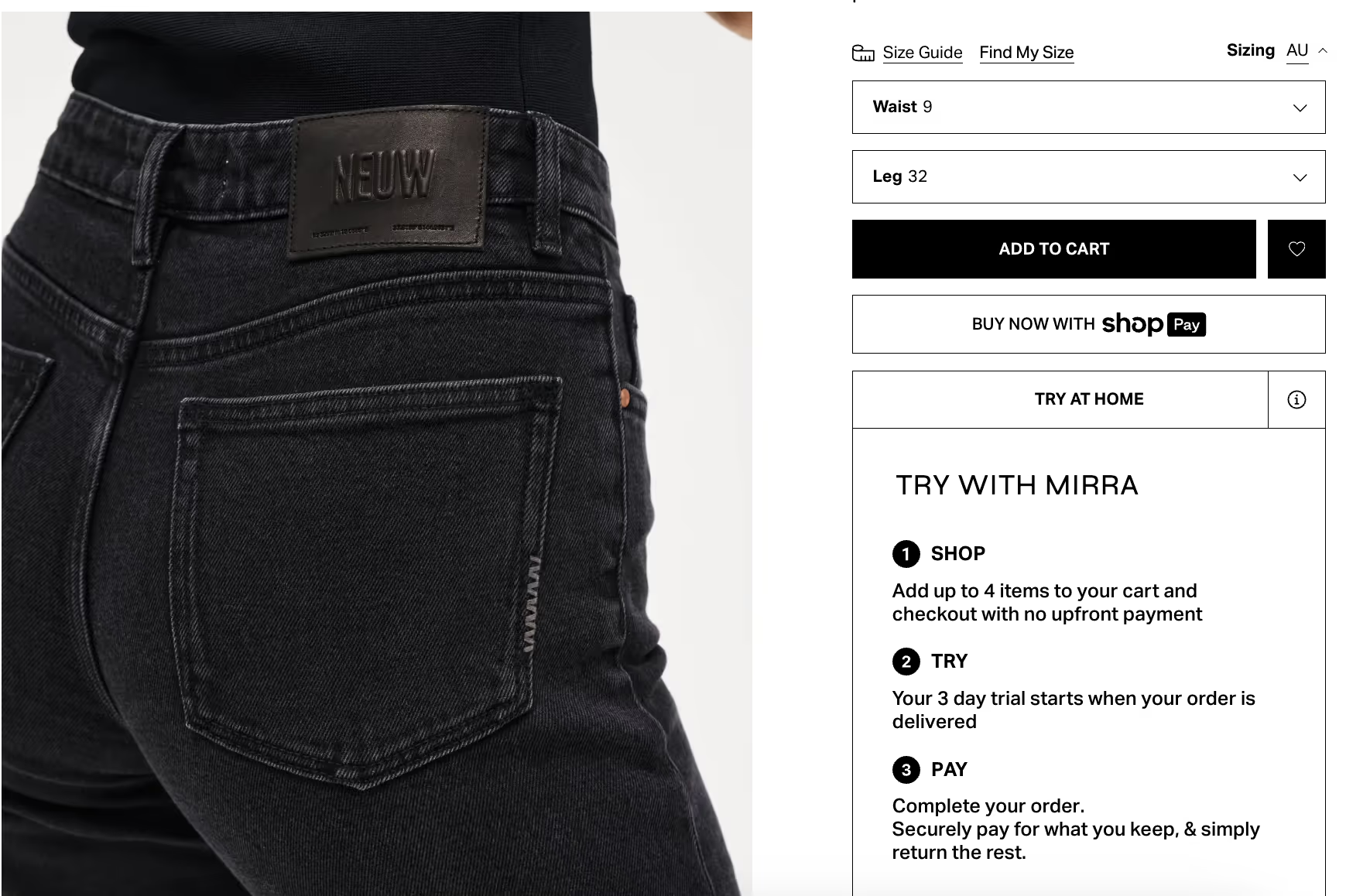
Mirra recently cited a 114% higher AOV after returns for a mid-high-end Australian womenswear brand.
“[The customer]’s not choosing one safe option because she's anxious about getting it wrong,” CEO Pete Ceredig-Evans said in a LinkedIn post.
“She's building a look. She's adding the second piece. She's trying something new/different, and the style she wasn't sure about. The basket grows because her confidence grows.”
When a customer is trying on clothing with their preferred lighting, mirrors, and environment set up just the way they like it, TBYB has immense potential to increase metrics like conversion rates and customer satisfaction for first-time buyers, with some brands seeing up to 25–35% higher conversion rates. The process also helps to reduce purchase anxiety at the checkout, as customers are more likely to buy when they know they can return items easily or aren’t charged upfront.
However, the key metric here isn’t just AOV, but retained AOV by product.
Improving return rates with Retained AOV by Product
Retained AOV by product refers to the average order value that remains after the returns have been processed, and is often analysed by product. In fashion retail, standard AOV is the number of orders versus the total revenue
AOV = Total Revenue / Number of Orders
However, returns can dramatically change this number, which makes retained AOV the more accurate metric to influence future decisions.
Retained AOV = Net Revenue After Returns / Orders Retained
With this number, e-commerce and merchandising teams can drill down on product analysis to discover insights:
- The products that customers are keeping that drive the highest net order value
- The SKUs that drive large orders but are constantly being refunded
- The items purchased are bought together to increase the basket size, and are not exchanged or returned
- The SKUs with low return rates that encourage repeat purchases of other items
Fashion teams can adjust their assortment and merchandising strategies accordingly by understanding and prioritising the products that are building profitable baskets and improving paid marketing ROI.

Identifying AOV boosters with data
Data limitations can restrict a brand’s ability to understand and address the causes of returns, and which products are prompting higher AOV. With the right customer and product data sets, fashion teams can quickly isolate categories, stories, shapes, or sub-categories that are helping or hindering margin, take those learnings and action accordingly within your merchandise planning.
If users can quickly and visually identify return patterns and AOV drivers and take action on a product level, the overall return rate will begin to drop and the AOV can begin to increase. This is why Style Arcade allows users to view return rate and the reasons for returns filtered by category, sub-category, colour, shape, store, country, shipping state, supplier, marketing event, or campaign. And why the following metrics were built into the platfomr:
Top Acquisition: This metric allows you to track products that are acquiring new customers. Here you can determine what percentage of new customers are converting for the first time on specific products.
Upselling Fast: With this metric you can determine which products are driving customers to spend more. The products in this metric have been purchased by new customers and show the percentage of returning customers, and how much the average second sale spend was in the following 90 days.
High Loyalty: Track products that are creating loyal customers or big spenders. This metric shows you which products are enticing your big spenders (brand loyalists) to keep spending. Depending on the launch period you’d like to analyze, the tool allows you to see the customers that bought X products are spending X amount over X time period.
Redesigning the decision experience
For customers with high enough purchase intent to use shopping methods like Buy Now Pay Later (BNPL), bracketing (buying different sizes of the same product), and virtual try-on, the moment to increase customer confidence is there for the taking for retailers.
TBYB offers what is essentially an obligation-free service, but with the advantage of a stress-free decision-making environment for the customer who is already willing to explore the brand with higher-value baskets.
If an online brand can capitalize on that intent with flawless delivery and a comfortable at-home try-on experience, they can not only gain valuable knowledge on return reasons that side-step pricing, but also increase the chance of the products being kept by the customer.
Additionally, retailers will be able to reduce their reliance on promotional discounts and markdowns to get the customer over the line, as the frictionless experience can result in higher margins and repeat purchases from satisfied TBYB customers.
Learn more about how Style Arcade’s features can help you learn more about your customers and boost your AOV.


.avif)
