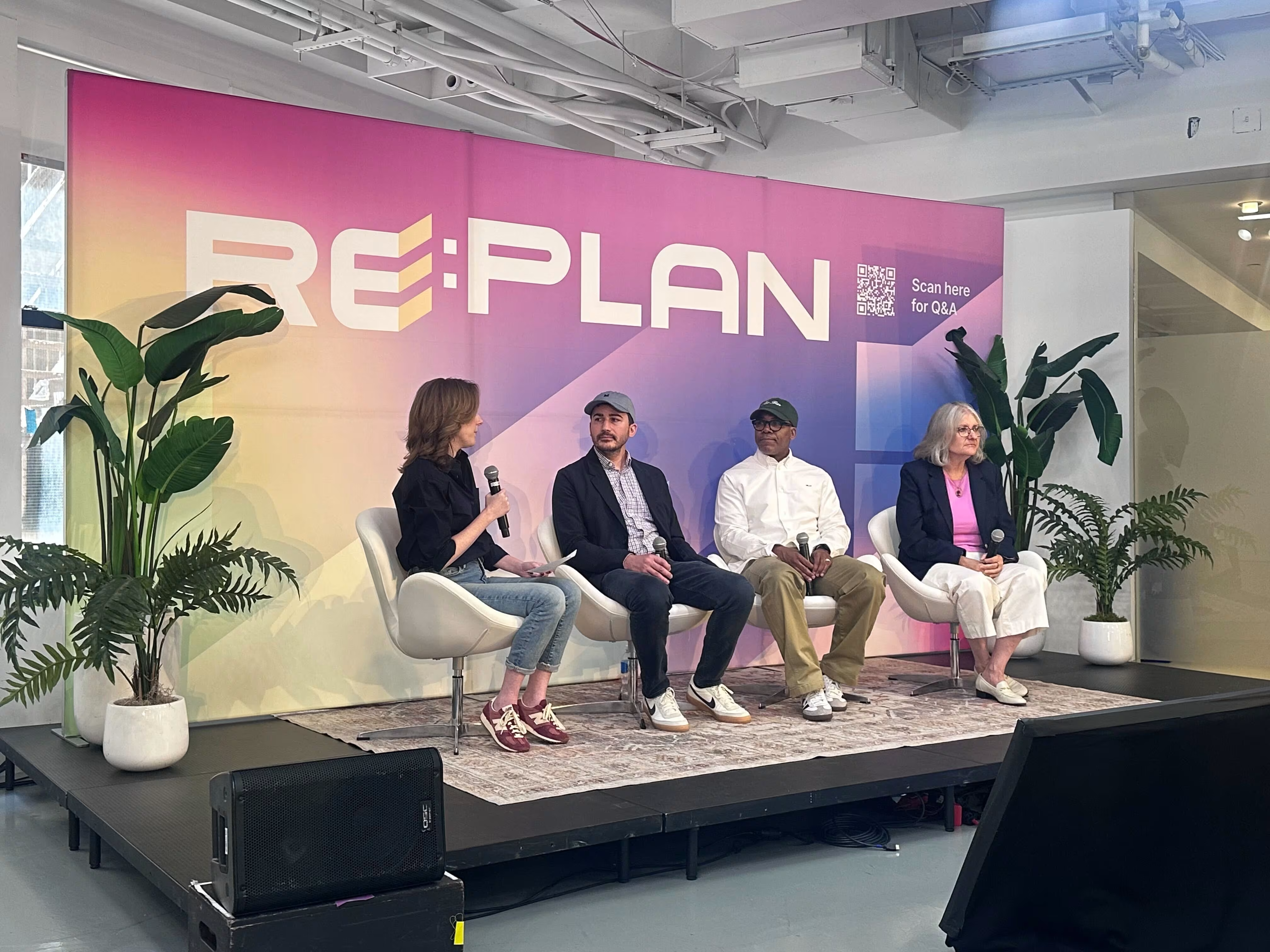
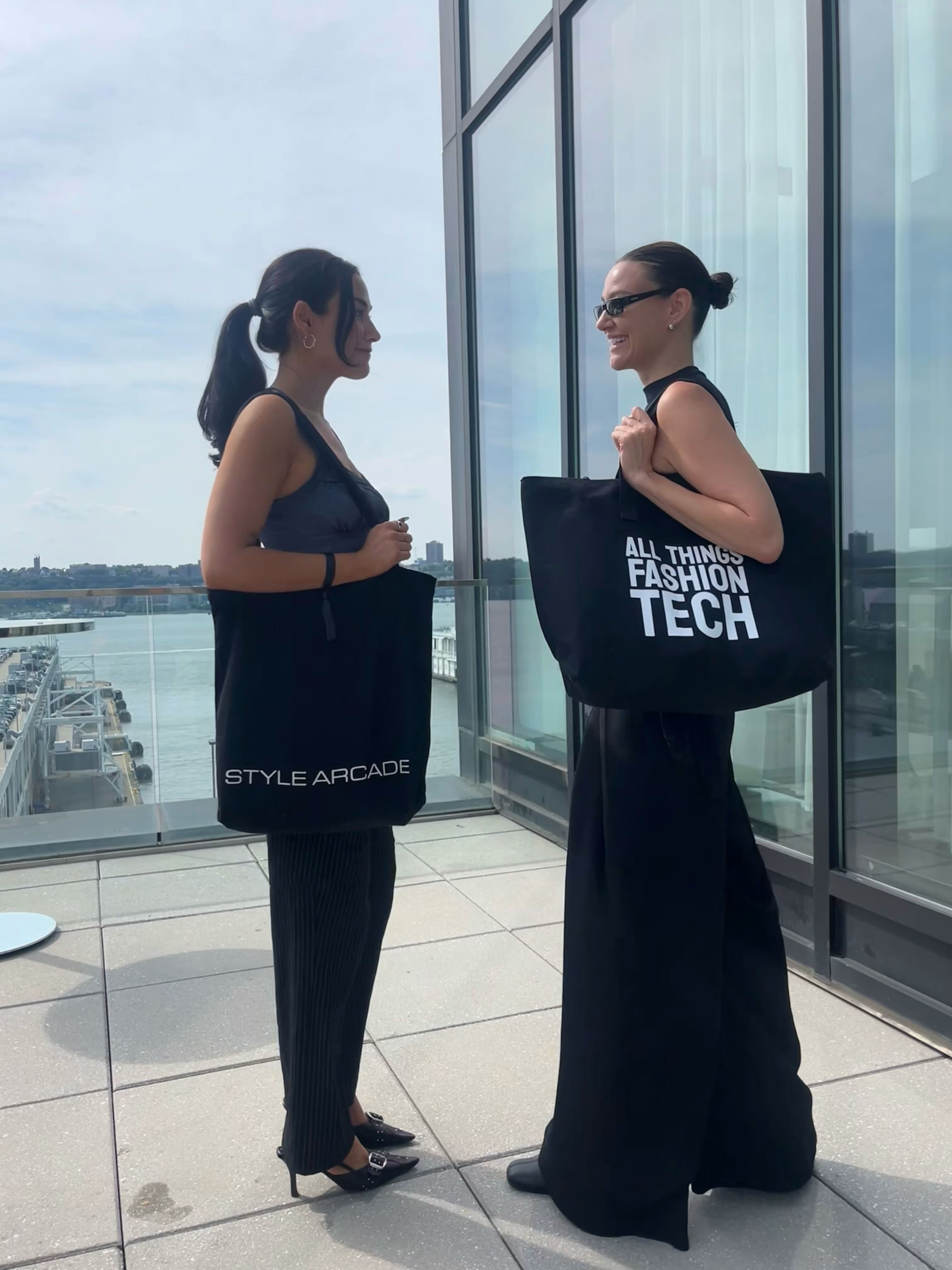
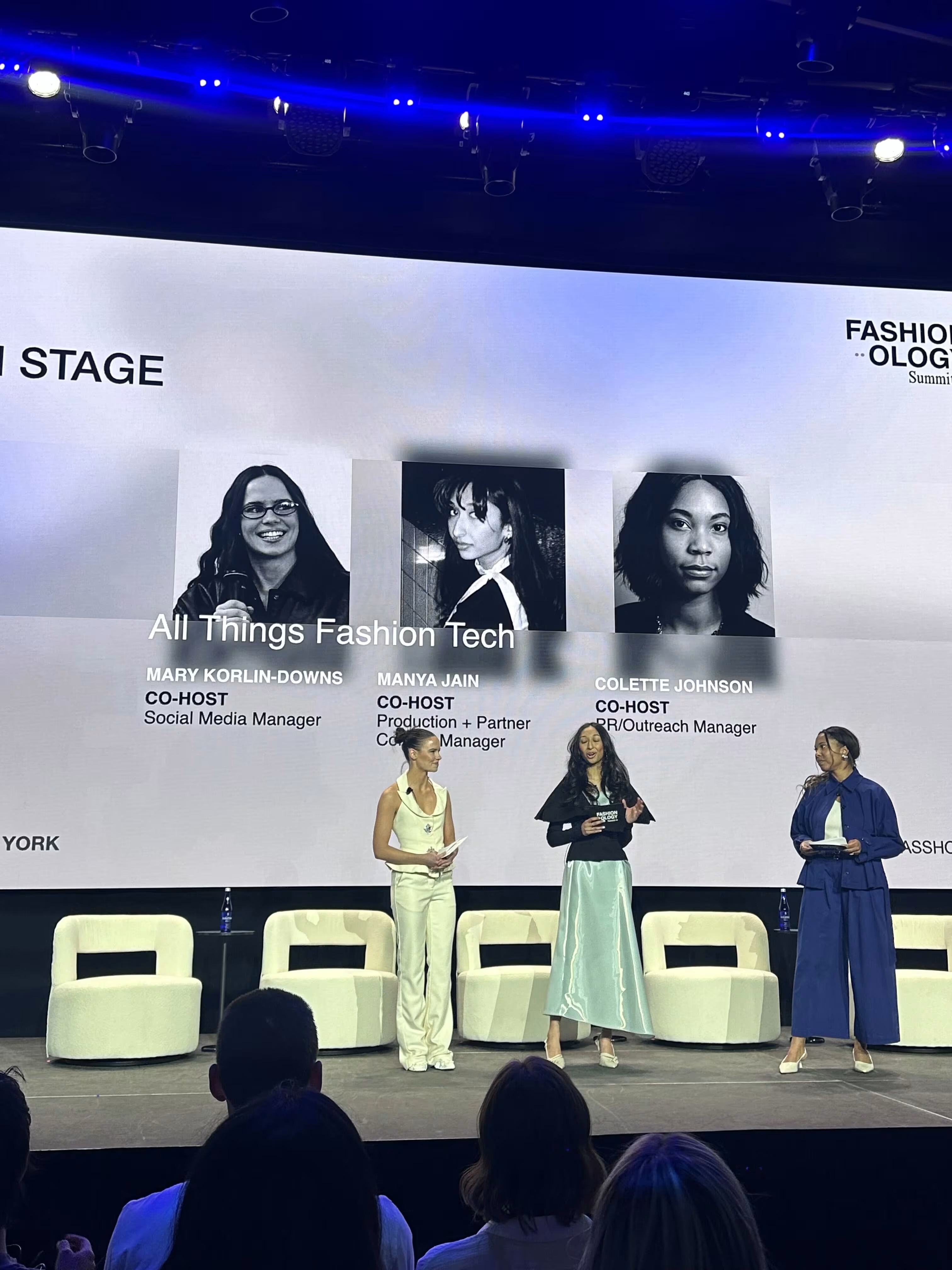
The Style Arcade team touched down in New York for fashion tech's largest-ever industry conference, the Fashionology Summit. The conference doubled down on how modern commerce is ushering in a new era across retail product discovery experience, resale, agentic shopping, and trend forecasting.
Here’s everything you need to know about what retail, ecommerce, and fashion leaders were discussing during the event, and where the future of fashion tech is headed.
Fashionology Summit takeaways for fashion retailers
1. AI is moving from a productivity tool to a commerce layer
The conversation has shifted beyond using AI to create content or improve internal workflows. Brands are now focused on how AI will fundamentally change the shopping journey through personalized discovery, agentic shopping, merchandising, search, resale, and product recommendations. The consensus was that consumers will increasingly shop based on intent ("help me pack for a trip") rather than traditional category navigation.
2. Flexibility is becoming a competitive advantage
Trend cycles continue to compress, and brands are responding by making smaller bets and preserving flexibility. One example shared was that the average time between wholesale order placement and product delivery has dropped from 263 days to 102 days over the last five years. The ability to react quickly is becoming more valuable than predicting perfectly.
3. Consumers want personalization, but they still need trust
Whether the discussion was AI, resale, virtual try-on, live shopping, or creator commerce, the underlying theme was trust. Technology can remove friction, but brands still need to prove authenticity and help consumers feel confident in their decisions.
4. Commerce is becoming more experiential
Several speakers noted that consumers are increasingly looking for experiences, community, and self-expression. Sports fandom, live events, customization, live shopping, creator communities, and resale all reflect a desire for commerce to feel more personal and participatory.
5. Omnichannel is no longer a strategy, it's table stakes
The conversation has evolved from "Should we be omnichannel?" to "How do we create a seamless experience across every touchpoint?" Brands are focused on creating consistent experiences across stores, ecommerce, social commerce, pop-ups, resale platforms, and marketplaces.
Trend forecasting: From demographics to mindsets
One of the strongest sessions explored how trend forecasting is evolving.
A few standout takeaways:
- Traditional demographic segmentation is becoming less effective. Brands are increasingly looking at values, motivations, and lifestyles to understand consumers.
- Pinterest shared how search behavior is becoming an early indicator of cultural shifts, with sports, fandom, and female athletes emerging as major trend drivers.
- WGSN discussed how generations are becoming less useful as standalone consumer segments, with brands needing to understand the emotional drivers behind purchasing decisions.
- Several speakers emphasized that not every runway trend becomes a commercial success. The winners are brands that can distinguish between cultural buzz and actual demand.
Favorite quote:
"Get off your phone and get into culture."
The future of commerce and agentic shopping
This was probably the most forward-looking conversation of the day.
Key themes included:
- Shopping is shifting from search-based experiences to intent-based experiences.
- Brands are preparing for a future where AI agents help consumers discover products, build outfits, plan purchases, and make recommendations.
- Retailers are investing heavily in data infrastructure today to support future AI-driven experiences.
- Multiple speakers stressed the importance of remaining flexible because the AI landscape is evolving so quickly that nobody knows who the long-term winners will be.
One interesting takeaway was that several large retailers are rebuilding their data foundations to be "AI-first" rather than layering AI on top of legacy systems.
Resale continues to go mainstream
The resale discussion reinforced how dramatically consumer behavior has changed.
- Consumers increasingly start their shopping journey in resale rather than treating it as a secondary option.
- Resale is no longer viewed as a budget alternative—it has become a preferred way to discover products.
- AI is making both buying and selling easier through automated listings, pricing recommendations, search, and discovery.
- Live shopping is becoming an important trust-building mechanism, especially for secondhand goods.
A recurring point was that many brands still underestimate how often consumers consider resale value when making an original purchase.
Virtual try-on and the future of product discovery
Several speakers highlighted how virtual try-on is moving beyond novelty and becoming a meaningful conversion tool.
Key takeaways:
- Consumers engage more deeply when they can visualize products on themselves rather than on a model.
- The strongest experiences focus on helping shoppers understand how products fit into their actual lives, not just how they look.
- Virtual try-on is proving particularly effective for higher-priced and luxury purchases.
- The future of product discovery is increasingly visual, personalized, and context-aware.
.avif)
My biggest takeaways
- The fashion industry is becoming dramatically more responsive. Brands are investing in systems and processes that enable them to respond faster, rather than relying solely on long-range forecasting.
- AI will reshape commerce, but trust remains the differentiator. The technology is advancing rapidly, but consumers still want authenticity, human expertise, and confidence in their purchasing decisions.
- Community is becoming a stronger driver of purchasing behavior. Whether through creators, sports fandom, live shopping, resale, or in-person experiences, consumers increasingly want commerce to feel connected to culture and identity.
- The brands that win will blend technology with human insight. Nearly every session reinforced that data and AI are powerful, but understanding culture, emotion, and consumer motivations remains the real competitive advantage.
Overall, Fashionology felt less focused on individual technologies and more focused on how the entire fashion ecosystem is adapting to a consumer who expects personalization, flexibility, authenticity, and seamless experiences everywhere they shop.