Is your influencer strategy outpacing your inventory? 5 takeaways from Thoughtful Minds Connect
The main learnings for marketing and merchandise planners to align on creator content from the Thoughtful Minds Connect panel at Meta HQ featuring Style Arcade, Meshki and Perform Retail.
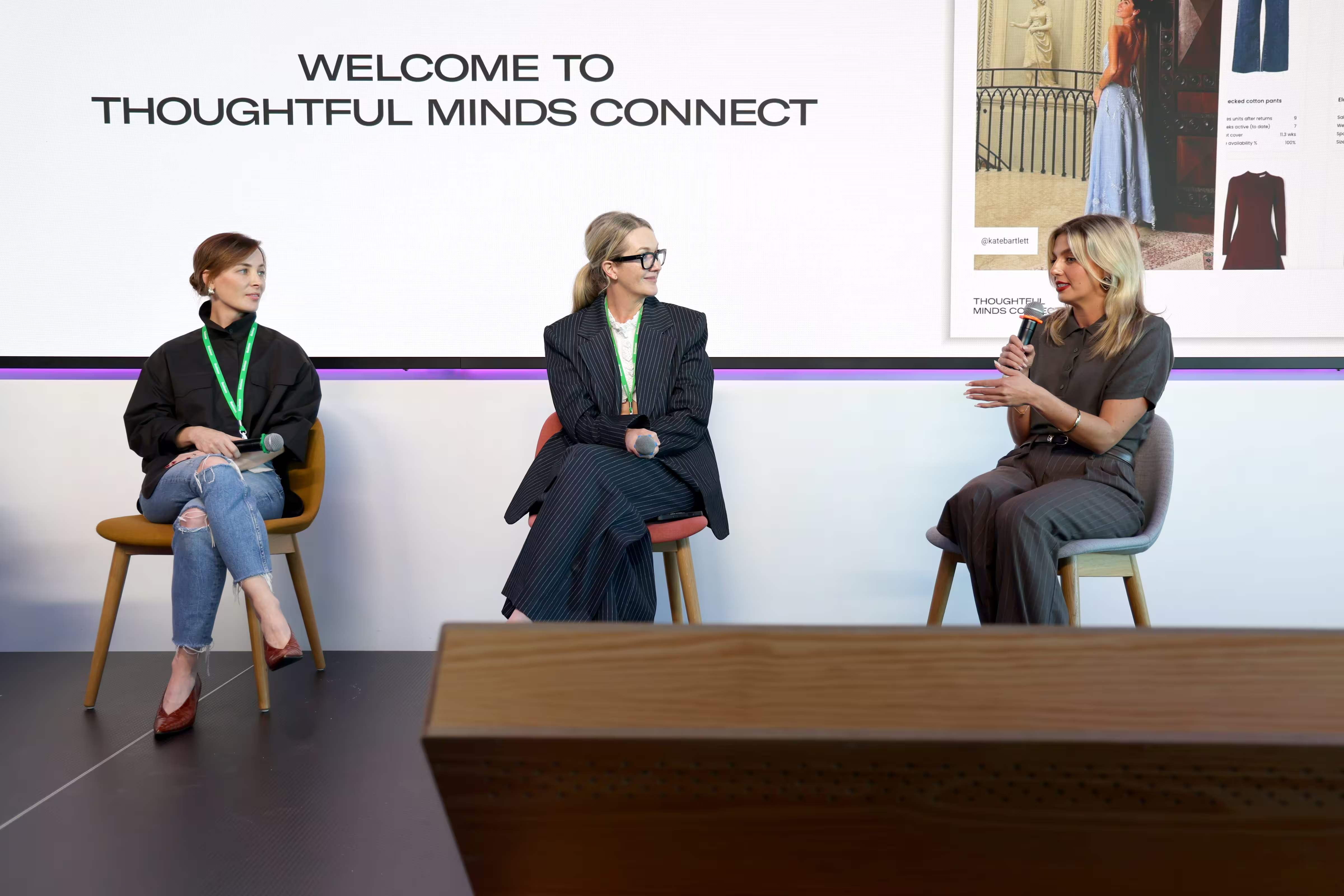
That was the question at the heart of the Thoughtful Minds Agency's Thoughtful Minds Connect panel at Meta HQ featuring Style Arcade CEO Michaela Wessels, fashion merchandising consultant at Peform Retail Teneille Oakley, Meshki’s very own Head of Brand Marketing, Press and Influencer, Courtney Judd, and moderated by Ragtrader’s Assia Benmedjdoub. The session unpacked what happens when creative demand moves faster than traditional retail planning.
The conversation landed on one clear idea: the brands best positioned to capture creator-led demand are the ones connecting creative, commercial and merchandise teams much earlier.
Here are the key learnings from the session:
1. Marketing and merchandise need to speak the same language
One of the biggest challenges discussed was the disconnect between the teams responsible for creating demand and the teams responsible for fulfilling it.
As Michaela Wessels, reflected from her time at The Iconic, a Black Friday merchandise plan once looked like a huge success, until the marketing team revealed they had planned for significantly less demand. Why? The acquisition and traffic legwork hadn't been done yet.
A great merchandise plan can't deliver without the demand behind it, and great marketing can't deliver without the product to support it. These two departments need shared targets, shared visibility and a shared understanding of what success looks like.
This becomes even more important when creator campaigns are involved. At Meshki, merchandise is brought into creator planning early, with product, buying and creator teams assessing collections together and identifying the products worth backing more heavily.
The takeaway? Don't wait until a campaign is live to ask whether you have enough stock. The merchandise strategy should be part of the creative strategy from the beginning.
2. Build for reactivity, without relying on it
Creators have fundamentally changed the speed at which demand can appear.
A product planned 12 or 18 months ago can suddenly become the product everyone wants tomorrow.
Meshki has responded by building around 30% reactivity within its plans, creating room to replenish, recolour or respond to emerging demand while maintaining the longer-term product strategy.
However, being too slow means missing the moment, and being too reactive can leave brands with excess stock and a product strategy dictated entirely by whatever happens to be trending this week.
The answer isn't to abandon long-term planning, but to create enough flexibility within it to respond intelligently. Pre-orders, prepared fabrics and faster quantification can all help brands capture demand without completely rebuilding the range every time a creator post takes off.
3. When something goes viral, go beyond the product itself
One of the most useful examples from the panel came from a Meshki campaign that demonstrated what happens when an unexpected creator moment hits.
A dress that had already been marked down suddenly generated significant traffic after being spotted on a celebrity influencer. Instead of simply trying to reorder the exact product, the team looked at what else they could do with the demand: similar styles, existing products with deeper stock, a dedicated edit and a recolour in the next production run.
Consider what it is about the product that's resonating, and by what other product or category else can you capture that demand? That requires marketing and merchandise teams to be looking at the same information in real time.
4. True Rate of Sale (TROS) can turn virality into a commercial decision
When a product sells out, the obvious question is: How much more could we have sold?
The panel highlighted the importance of understanding TROS when a product is actually in stock at the size level, to quantify the demand that was lost because inventory couldn't keep up.
Instead of evaluating whether a campaign generated sales, brands can start asking:
- Did we have enough stock to capture the demand?
- How quickly did the product sell?
- Where was the demand strongest?
- What revenue was potentially lost through stockouts?
- How much depth should we carry next time?
For marketing, this provides a clearer commercial picture. For merchandise, it provides a stronger basis for future buying decisions.
5. Data should empower instinct, not replace it
Perhaps the most important point was that becoming more commercially informed doesn't mean becoming less creative.
The panel acknowledged the value of the instinctive buyer or marketer, the person who can see that something is going to connect before the data can prove it.
A marketer should be able to understand the commercial implications of a campaign without losing the freedom to take a creative risk. And a merchandiser should be able to understand the cultural or creative opportunity behind a product without relying solely on historical performance.
A great example came from Courtney's time at Mecca, where the team identified significant momentum behind Sol de Janeiro's Bum Bum Cream and worked closely with product and buying teams to support a major creator-led campaign – even though the wider team wasn’t confident in the decision.
The brand grew 500% over eight months, with the teams continuing to work together on inventory and demand over the following year.
Creator-led demand isn't slowing down
If anything, the gap between a cultural moment and a purchase decision is getting smaller. Once marketing and merchandising can remove the siloes, the brands that can connect creative demand with merchandise strategy - using shared data, real-time visibility and enough flexibility to react - will be better placed to turn viral moments into sustainable revenue.