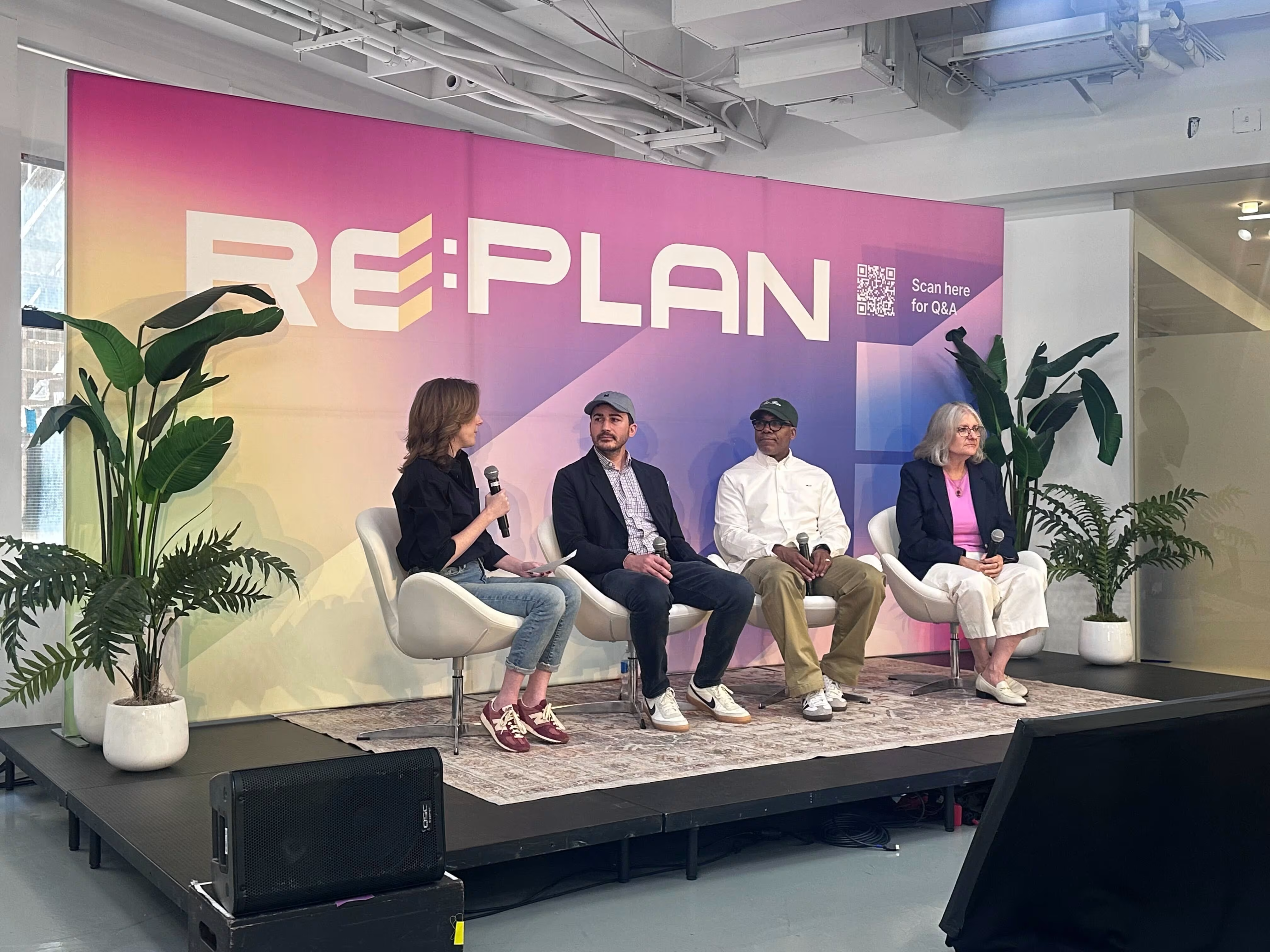
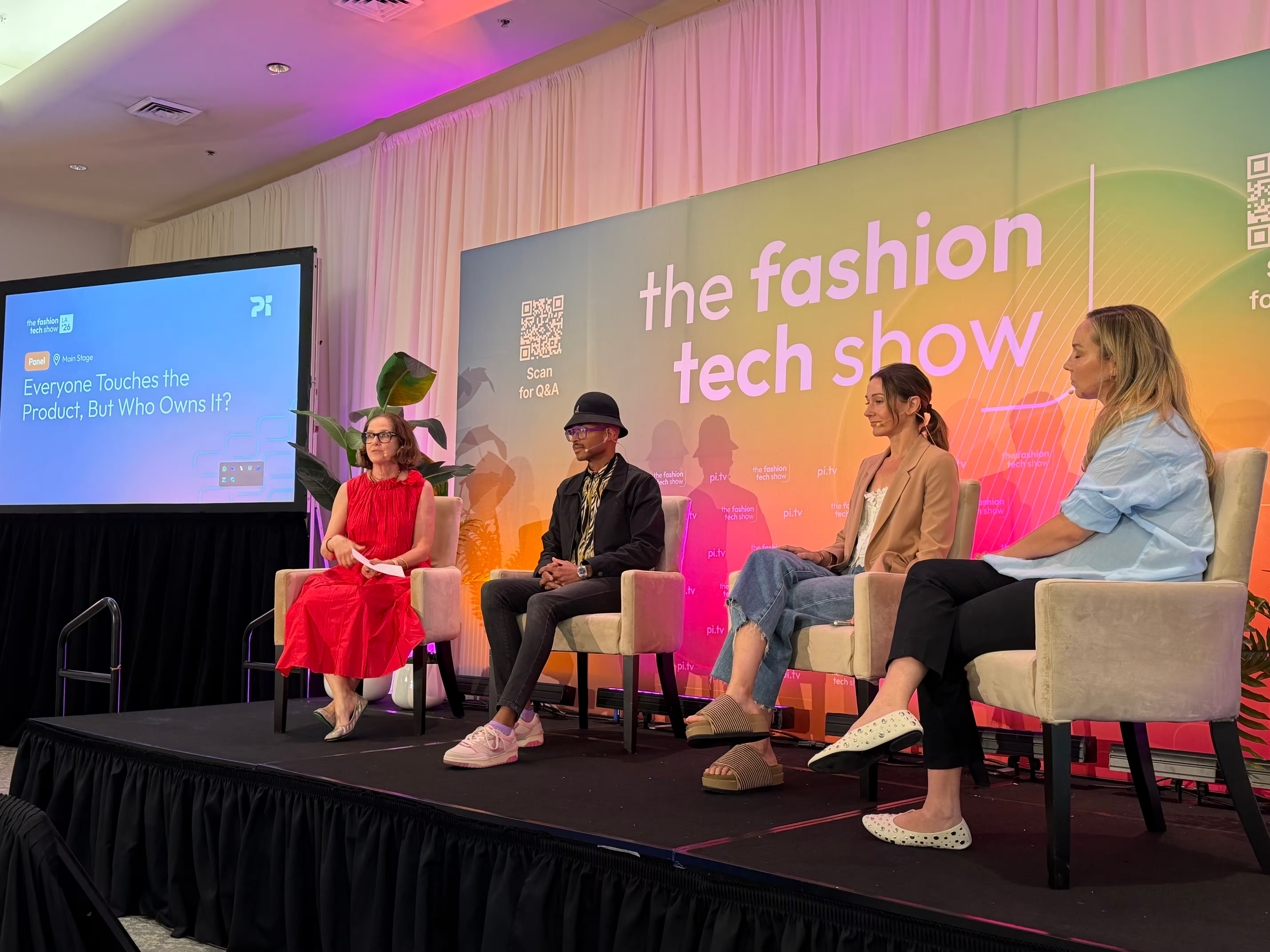
Last week, Style Arcade attended The Fashion Tech Show LA, where brands and technology innovators came together to learn and connect at the beautiful Luxe Sunset Boulevard Hotel. It's fascinating to watch how the fashion industry is transforming, and to be part of it! Here's what resonated with me most from the show.
1. AI usage has moved from testing to full adoption in a year
Last year, most conversations about AI at the show were about experiments. This year, they were about daily workflows. Paula Unger summed it up nicely: last year, she hosted a roundtable at the show and only 2 participants had used AI. This year all of them were using it weekly.
Design and product development teams are using it for concepts, sketches, renders and 3D, and they're starting to connect it to tech packs to get product to market faster. And for merchants, it’s about making decisions on what to range, how deep to buy and what to cut.
2. Shorter lead times only pay off if you can read demand
On the show's local production panel, Ashley Stickler of CreateMe Technologies said offshore lead times of around 19 months mean "Trends have shifted. We've moved on" by the time goods land. Keith Hoover of Black Swan Textiles said AI can help brands "identify near-term consumer demand more accurately" and reduce buying too much or too little.
For many brands, faster supply turns merchandising into a cycle of small, frequent bets. Buy shallower up front, watch early sell-through and reorder the winners. That needs daily style-level performance data, not a review at the end of the season.
3. The question on everyone's mind: What AI should I build, and what should I buy?
This was the question I heard most all week. Most brands have moved past asking whether to use AI. Many are already mixing off-the-shelf tools with ones they've built themselves. Now they want to know where their time and budget will actually pay off. The show's agenda reflected that, from "Why Is AI Working for Some and Not Others?" to a live sprint on "What I'd Build If I Started Today."
A simple rule of thumb: buy the foundation, build the judgement. Pulling data together, reporting and forecasting are shared problems, and building them yourself burns time and budget. Save your in-house effort for what's unique to your brand, like how your merchants edit the range and read the customer.
4. Why getting your fit and size curves right is crucial for reducing returns
Fit and sizing had its own track and a keynote, "Bodies Are Changing Faster Than Fashion." Startups like Rust Coast are working on the problem from the product side, measuring garments in 30 seconds instead of about 20 minutes by hand.
Better fit technology only solves half the problem. The other half is the size curve. When the size split you buy doesn't match how customers are shaped and buying, you get broken runs in some sizes and markdowns in others, on top of the returns. Size-level sell-through and return data should drive every future buy.
5. AI takes over the busywork. Taste and judgement still sell the product.
The idea people returned to most at the show was that AI works best when it takes on the slow, repetitive jobs. It doesn't replace the creative call. Lou Mohanty, CEO of OmniThink AI, said in his show recap that AI still lacks, "and may always lack," the taste and judgement that fashion depends on. Its real value is in "removing drudgery," such as trend research, costing and tech packs, so teams get time back for strategy and brand.
He added that getting from concept to a product "that really sells (without returns!)" is still an open problem. Kathy Bailon's recap made the same point: "Agents and automation handle the plumbing; the brand still has to have a soul."
The same split applies to merchandising. AI and analytics should do the report-building, data pulls and spreadsheet work. That frees merchants to shape the assortment, set a clear point of view and make the calls that are unique to the brand.
Until next year
I'm already looking forward to next year's show, and I can't imagine how much will have changed by then. Thanks to the PI team for hosting such an incredible event, and thank you to everyone who took the time to meet and share their knowledge!