From the wrap dress to a protest. New York Fashion Week SS27 certainly made headlines, but the real show was the colourful character, effortless execution, and practical clothes destined for the woman who’s got everywhere to be.
The week at a glance
Seven days of New York Fashion Week have come to a close, with a schedule brimming with industry stalwarts and disruptive newcomers. Deemed a successful outing, the week featured the return of Diane Von Furstenberg by way of Henry Zankov, Rachel Scott’s second collection for Proenza Schouler, and indie brand Eckhaus Latta launching a J.Crew collaboration in line with its SS27 runway. NYFW also happened to make headlines for all the wrong reasons, with CFDA CEO Steven Kolb being stood down after an altercation with PETA protesters at the Cos show.
Otherwise, the fashion set landed in New York for the 2027 spring-summer season as the country’s sports-heavy summer began to sunset. Events like the FIFA World Cup, Knicks-mania, and the US Open have converged on the trend cycle over the past few months, influencing a variety of must-have items that have proven their staying power in the fashion lexicon. Sports jerseys, crop tops, mini skorts, and tracksuits have replaced traditional fan-wear designed to be worn beyond the game.
Meanwhile, the visibility and mainstream takeover of sport-inflected windbreakers, capri pants, and ballet-sneaker hybrids are more than just TikTok-ready aesthetics. It’s a high-low expression of contemporary taste balanced with what is ultimately most appealing to consumers in a post-pandemic world: comfort.
However, as brands move away from micro-trend fixations or framing collections through the universally adoptable ‘quiet luxury’ lens, the designer labels of New York Fashion Week now find themselves navigating the balance of mass appeal and price point. The US has been repeatedly placed as the hot spot of luxury growth.
So, to combat the target-everybody-everywhere strategy, some American designers, whose reach doesn’t extend to the global scale of Ralph Lauren, Coach and Tommy Hilfiger, are adopting the make-less, sell-higher-margin tactic. Insiders noted the greater presence of VICs lining the show attendee lists. According to Magasin, the Substack by Laura Reilly, each look on the Khaite runway - clothing, shoes, and accessories combined - retails for around $50,000 USD.
Khaite, like The Row, is a key signifier of status, so the motive is apparent: fewer products, higher prices and greater exclusivity. And it's not alone. Elsewhere, high-end brands are operating with made-to-order models that further limit access to the product itself, leaving entry-level customers with the “merch”, i.e., logoed bags, footwear and accessories as their primary point of entry.
Could this deliberate limitation of accessibility be what restores luxury fashion’s scarcity, desirability and, ultimately, its potential for global growth?
In many ways, fashion’s favourite growth leaders, Chanel and Dior, weren’t far from mind. As the runways proceeded through the week, continuations of the ideas brought to light by creative director Matthieu Blazy’s refined modern woman (dropped-waist, embellished organza, sea-glass green) and Jonathan Anderson’s high-low romance (stove-pipe jeans, tapestry florals and peplum shapes) infiltrated the lookbooks and the catwalks. Not without the filter of American sportswear, of course – which made for imaginative yet practical collections, from Ralph Lauren to Rachel Comey, that catered to the classic New York renaissance woman.
Runway highlights
Diane von Furstenberg, under Henry Zankov, returned to the runway for the first time since 2017. Known for its revolutionary, one-and-done wrap dress, Zankov zeroed in on the silhouette to reinforce the brand’s signature.
“The wrap dress is a symbol of liberation, independence, sensuality,” Zankov said in an interview before the show. “What Diane did really hit a nerve with women.”
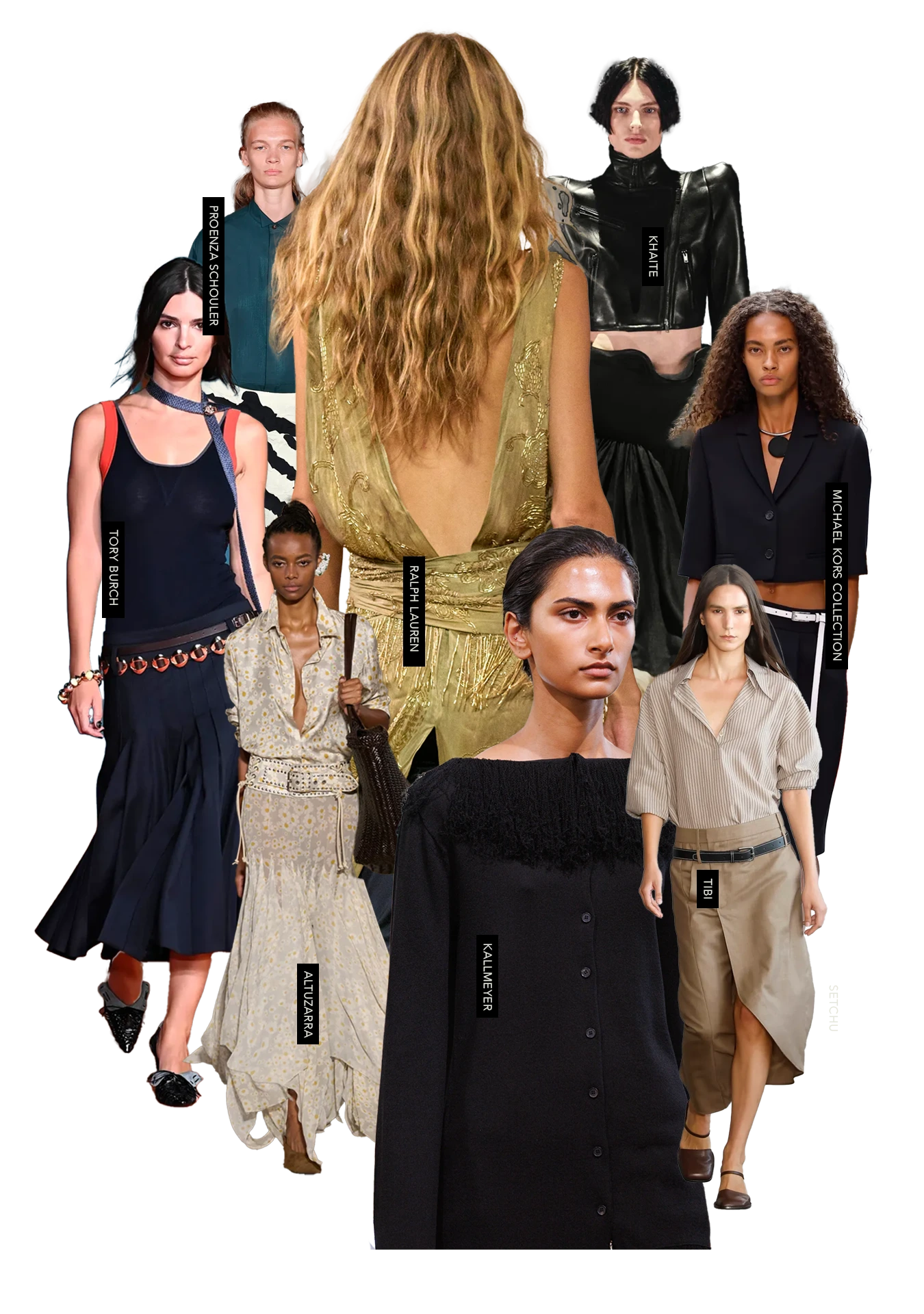
The result was nostalgic, with intentional print clashing that touched on Dries Van Noten’s oeuvre (the brand’s scarf skirts arrived in droves on the street style set). Also returning to the schedule were Tommy Hilfiger, Luar, and Thom Browne, while Magda Butrym and Conner Ives made their New York debuts. Khaite reclaimed its IYKYK crown with its sharp body-con leathers, ruffled hemlines, and undone romance, while Proenza Schouler doubled down on animal print and statement colour, with every model carrying the house’s storied PS1 bag.
Several trends have begun to signal a shift in style and silhouette, with denim chasing cigarette fits, stovepipe cuts and elongated styles like puddle jeans. The scarf belt, shirts wrapped around the waist, cummerbunds and utility belts offer pragmatic ways to depart from the traditional hourglass silhouette, while pencil skirts continue their less-than-corporate comeback. Sheer fabrics remain one of the key ways to add interest to otherwise minimal outfitting, from Calvin Klein to Khaite and Kallmeyer.
The trends
And now, the major trends from the NYFW Womenswear SS27 runways
The waist drop
As strict corsetry and crinoline shapes dominated the past few seasons, the waist is now disappearing, or slightly shifting as a point of definition. Instead of the traditional hourglass shape, dresses, skirts, and jackets hang from a much lower point, creating a longer, column-like silhouette so the torso appears elongated. The shift follows the return of hip-slung trousers and skirts that have moved the visual waistline lower, while sitting alongside the more maximal, expressive mood emerging this season.
Mondrian blocking
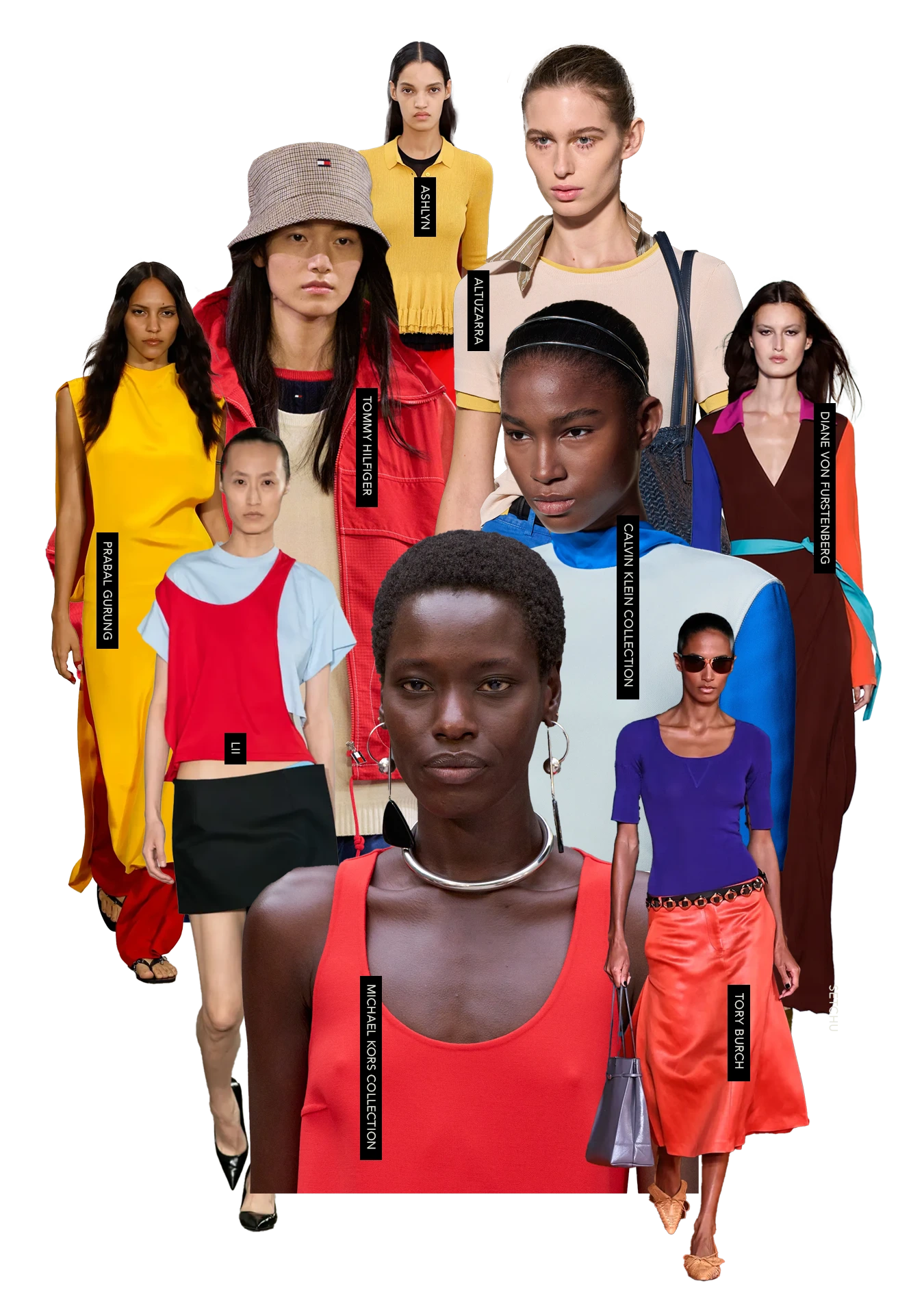
Colour blocking has taken up a renewed interest in modernism. This was particularly visible during NYFW SS27 with Michael Kors explicitly drawing on modernist artists including Alexander Calder and Ellsworth Kelly, with a wider deep-dive into modernism and art history across the shows. There was a 1960s thread underneath it all, which felt like references to Yves Saint Laurent's 1965 Mondrian dresses, which translated his grid-based compositions of black, white and primary colours directly into clothing.
Personality prints
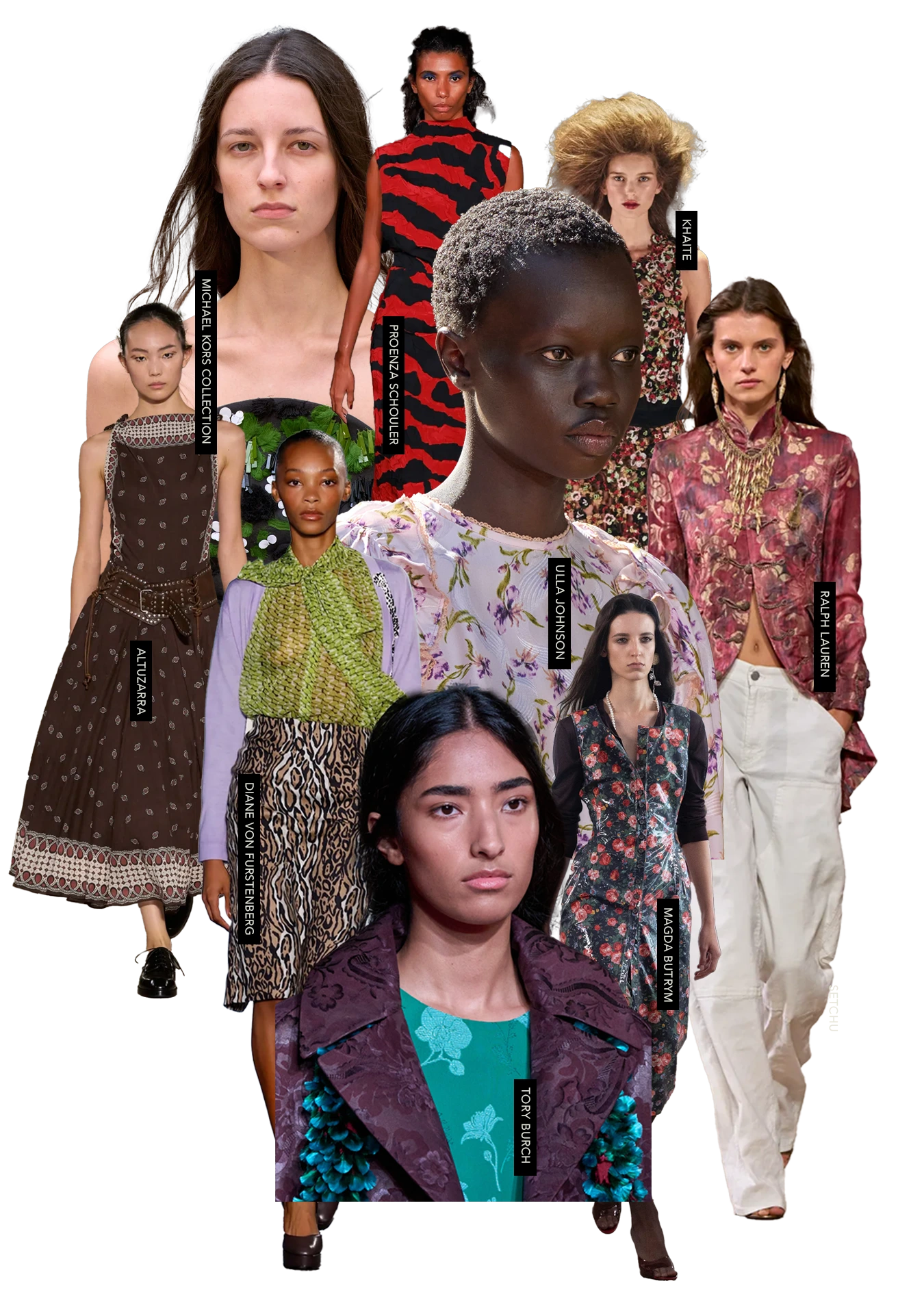
With designers looking to the 60s for key inspiration, statement prints had a personal quality, with loud animal prints and brocade florals aimed directly at certain types of dressers - rather than catering to a large consumer base. Elsewhere, the paisley print is making a comeback in womenswear, with the bandana bag leading the trend, up +384% in searches to last year according to Trendalytics, thanks to the versions by Marc Jacobs and Amiri. Hair bandanas, scarves and dresses in the 70s print are poised to stick around through next year.
Vintage romance
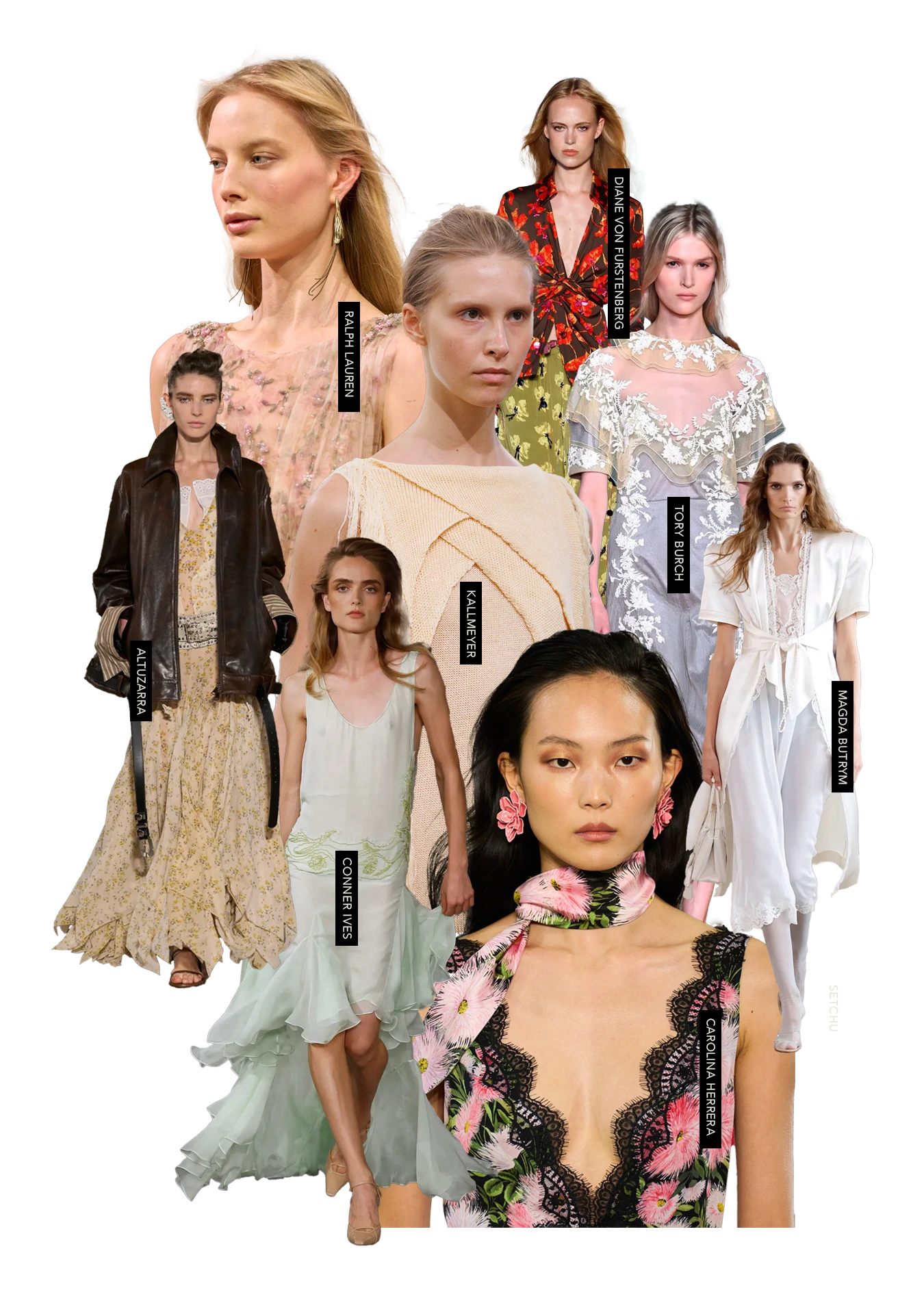
Already, an ultra-feminine, vintage aesthetic is resonating with shoppers. In an increasingly AI world, anything that resembles the handmade, the lived-in, and old-worldly is gaining traction, particularly with Gen Z shoppers, with styles like bishop-sleeve tops, milkmaid shapes, and smocked peasant blouses gaining traction. In New York, this was best exemplified at Ralph Lauren, with tactile, burnished, hand-painted and tie-dyed fabrics, Regency-style ruffles, and washed denim.
Life aquatic
Just like in menswear, fashion is moving towards aquatic shades like turquoise, teal and sea-glass. The newer iterations are more washed, mineral and translucent, tapping into the broader fascination with oceanic colours, from watery blues and algae greens to shell, pearl and iridescent finishes. This resort-ready colour is particularly effective with chocolate brown, butter yellow, soft pink, cream, white and denim, giving retailers plenty of commercial styling options.
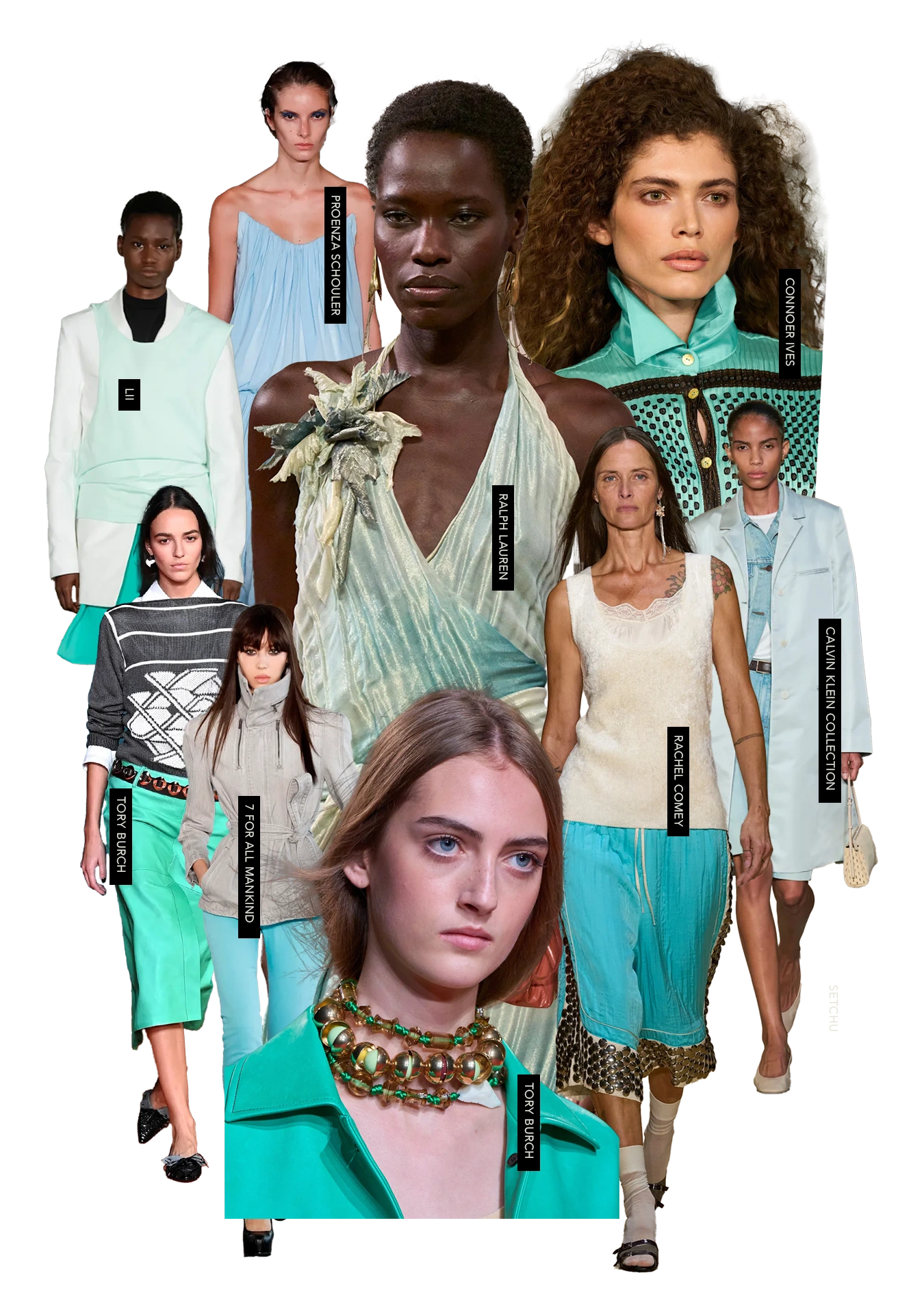
Image credits: Vogue Runway, Tagwalk